Sant Andrèu de Salardú

Type: Church
Century: XII-XIII-XV
Architectural style: Romanesque-Gothic-Renaissance
Village: Salardú
Municipality: Naut Aran

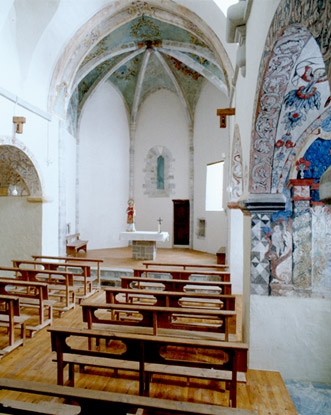
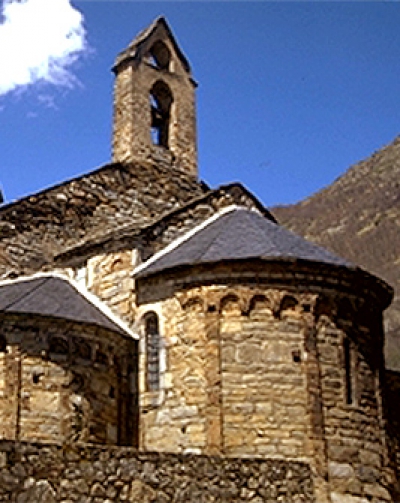
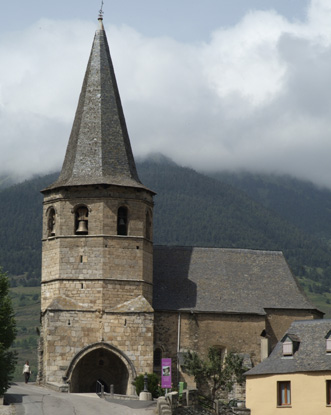
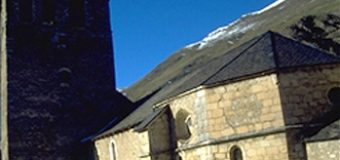
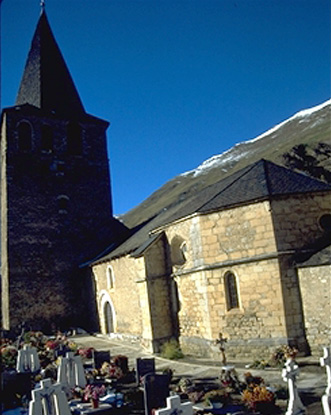
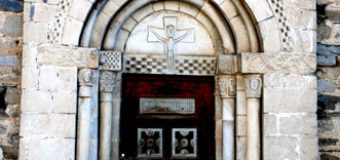
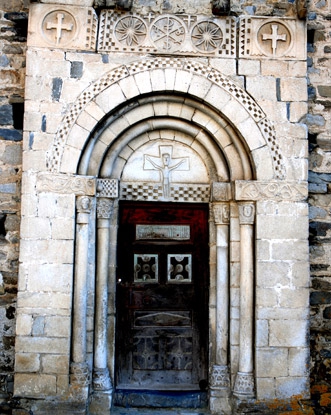
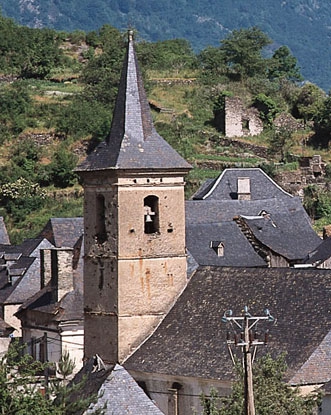
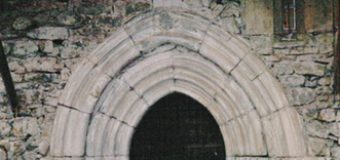
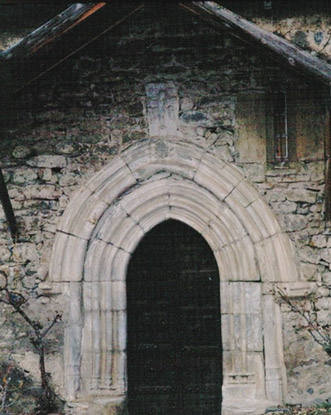
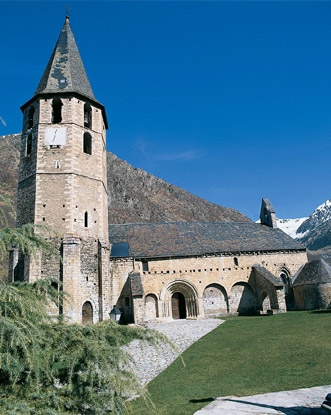
The church of Sant Andrèu greets us with an external architectural image that is typical of the late Romanesque, approximately from the 13th Century; it has a basilica-type ground plan with triple-apse heading and tympanum-free facade. The SW angle has a 15th-Century belfry whose ground floor still retains a habitable dome and rib structure space. The outer perimeter of the church offers, on the border of the upper frieze, an ornate sculptural ensemble in the form of modillions.The facade, conceived as five decreasing arches protected by a dust-guard, is decorated basically with vegetable motifs; there is a Christ’s monogram embedded above the keystone of the arch.
Inside you will be struck by an elegant gothic architectural structure resting on square-base pillars and ribbed vaults. Near the presbytery is one of the most extensive and best-kept wall paintings of the Aran Valley; they are 17th-Century paintings depicting different personages and biblical scenes.The crowning moment of the visit to Sant Andrèu de Salardú is when you approach the central apse, where the majestic sculpture sculpture of the Christ of Salardú stands, the masterpiece of the Erill la Vall workshop, which is also believed to have authored the Christ of Mijaran. The piece shows the image of a suffering Christ, with triangular section of the legs and the characteristic features of Romanesque religious iconologies; it dates from the 12th Century.
Sant Estèue de Montcorbau

Type:Church
Century:  XV-XVIII
Architectural Style: Romanesque – Gothic – Baroque
Village: Montcorbau
Municipality: Vielha e Mijaran

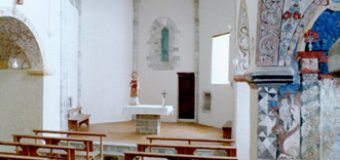
The church of Sant Estèue, despite its origins, absorbed the artistic legacy of Gothic and Baroque periods. The first thing the visitor notices on entering the church is its popular feel, particularly evident in the well-conserved and recently restored 18th-Century wall paintings.The central section of the nave and the baptismal font bear witness to the Romanesque period. The church of Sant Estèue underwent its first major transformation as far back as the 15th Century, when a polygonal Gothic apse replaced the original Romanesque one. The Gothic apse can be appreciated in all its splendour inside the church, where its architectural structuring is patent in the elevated and elegant ribs that emerge from the floor and meet at the ring of the dome that covers the apse area. Subsequently, in the Baroque period, five chapels were added to the sides of the nave, and have given the church its current appearance; these chapels illustrate different biblical episodes, which convey the popular spirit referred to at the beginning. The belfry attached to the apse was also added in the 18th Century, as was the entrance portico; the facade of this portico contains an embedded Roman cippus and a monogram of Christ.

Sant Laurenç de Mont

Type:Church
Century: XII, XVIII
Architectural Style:Popular
Village: Mont
Municipality: Vielha e Mijaran

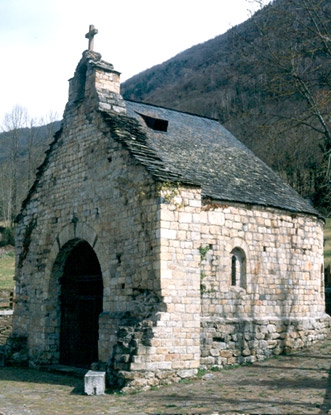
The church of Sant Llorenç is a work of small and Rustega dimensions. It is modern because it was built on a Romanesque church, of which only the portal remains. It has a nave with a barrel vault, from the Romanesque period and left with a baptismal font and there is a processional cross from the seventeenth century. The bell tower is square.

Sant Blai de Les

Type: Church
Century: XII
Architectural style: Romanesque
Village: Les
Municipality: Les

The small church of Sant Blai stands behind Was Baronia, a noble 17th-Century building in the village of Les. Its smallness, including its semicircular absidal space, seems to indicate that the current chapel would be part of the head of a building at its largest time, or was else the result of reconstruction work based on original elements.
The west wall -or head wall – which opens out of a semicircular arch, is wider than the actual body of the chapel, thus pointing to the possibility that the building was prolonged with a wide nave which, at some unknown point, was destroyed either by the hand of man or by the hand of nature. Moreover, the presence of four windows for no apparent reason has also given rise to hypotheses as to the possible former existence of a crypt.
Thus, this building, which would seem to be from the 12th Century, has a very curious appearance which to this day poses question marks as to its original architectural and functional structure.

Sant Pèir de Gessa

Tipo: Iglesia
Siglo: XII,XVI-XVIII
Estilo arquitectónico: Renacentista-Barroco
Población: Gessa
Municipios: Naut Aran

La iglésia de Sant Pere es una construcción moderna, del siglo XVII. La base de la capilla es románica, del siglo XII.
La puerta norte de la iglésia es de estilo neoclásico. El campanario, del siglo XVII, es de torre cuadrada, amplio y poco alto, el cual se levanta aislado al lado oeste.
La planta es rectangular con tres capillas laterales a ambos lados. El altar es barroco y conserva un pie de altar románico. La iglésia también contiene una pila baptismal por immersión, románica, muy rústega. Tiene un magnífico plafón pictórico del siglo XVII.

Sant Martin de Tours de Gausac

Type:Church
Century: XIII-XV
Architectural style:Romanesque – Gothic
Village: Gausac
Municipality: Vielha e Mijaran

The church of St. Martin of Gausac is one of the finest examples of Gothic architecture Aran, a rare artistic style in the Valle de Aran. It remains hinged on a single nave, with the addition of side chapels and headed by a polygonal apse. Despite the unusual stylistic unity demonstrating Gausac church, yes constructive sequentiality seems boot of the late thirteenth or early fourteenth to reach the fullness of the formal Gothic fifteenth century evidence. Thanks to the intervention made the summer of 2001, the presence of structural elements belonging to the last Romanesque period is confirmed. The Romanesque heritage is also reflected in his baptismal font; It is a cilindriforme sculpted glass where an iconographic discourse that relates to baptismales batteries Casau and Escunhau. Also from the Romanesque period is the stoup to find mated inside the church, near the exit door; the decoration of this stack is based on vegetable elements (stems, leaves), very representative of the rest of holy water fonts (Mont, Casau, Escunhau, Begos). The architectural structure of the church stands based semi-cylindrical columns section where they dig the vaults covering the building; the apse, following the formal guidelines of the Gothic, is polygonal configuration. Finally, note the sculpted Christ on the wall encastado find the narthex entrance and could correspond to a tympanum of the previous Romanesque church.

Sant Julian de Garòs

Type: Church
Century: XV-XVI
Architectural Style: Gothic-Renaissance
Village: Garòs
Municipality: Naut Aran

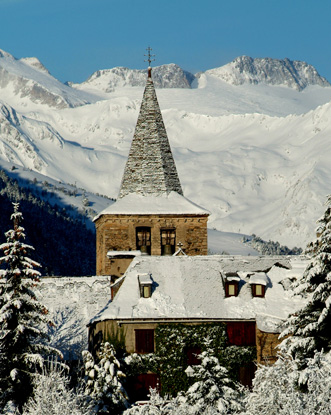
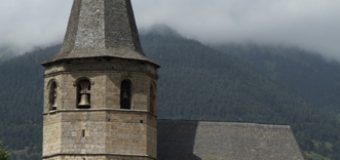
The parrochial church of Sant Julian is of Romanesque origins and was renovated in the 14th and 15th centuries. The squared bell tower has 3 and 2 large, lateral windows to the sides and a pyramidal covering. The forged Renaissance door stands out.

The church has one nave with side chapels and absides with Gothic veins united by a central nave. The main altar is Baroque from 1776 and conserves a carving of Christ and a Gothic image of the Virgin.

Sant Pèir d’Escunhau

Type:Church
Century: XI-XII,XV, XVII
Architectural Style: Romanesque – Gothic
Village: Escunhau
Municipality: Vielha e Mijaran

The appeal of the church of Sant Pèir lies above all in the architectural and sculptural vestiges of its Romanesque past: the structure of the nave, the facade and the baptismal font.
All that remains of the nave’s Romanesque structure is the masonry and semicircular vault.
The facade of Sant Pèir de Escunhau which, along with its baptismal font, is its most outstanding attraction, is based on three decreasing arches and two archivolts sustained by columns. In the centre of the tympanum there is a sculpted figure of Christ, similar to those that can still be seen in the narthexes of Sant Miquèu de Vielha and Sant Martin de Gausac. The rest of the facade is decorated with different sculptural elements, such as the capitals, with anthropomorphic representations the chequered pattern, a recurring decorative resource in the churches of the Aran valley and the lintel which crowns the architectural body of the facade, comprising a Christ’s monogram flanked by two enclosed eight-point stars.
The baptismal font features a sculpted iconographic language which relates it to the baptismal font of Gausac and even of Casau. It alternates vegetable and geometric motifs with highly symbolic figurative representations; they are of very linear design and date from the 12th and 13th Centuries. The Gothic period’s influence can be appreciated in the internal structure of the church, supported on ribs and ribbed vaults, as well as in the outside window, located in the head of the south wall.
The current belfry was added to the church between the 17th and 18th Centuries.

Mair de Diu deth Rosèr de Es Bòrdes

Type:Church
Century: XIX
Architectural Style: Popular
Village: Es Bòrdes
Municipality: Es Bòrdes

The parrochial church dated to 1806 was built above a smaller previous church.

In the door of midday there is a tombstone of an old sarcophagus from the 15th century which pertains to the Lleó Castle. From the church rises a square bell tower.

It has only one nave, edge vault and presbytery of 3 half pointed arches and with circular based pillars in the interior.

Sant Andrèu de Casau

Type: Church
Century: XII,XV y XVII
Architectural style: Romanesque – Gothic
Village: Casau
Municipality: Vielha e Mijaran

The church of Sant Andrèu de Casau is a perfect architectural example that clearly illustrates one of the typical characteristics of Aranese ecclesiastic heritage: the co-existence of different artistic styles in the same building. The baptismal font is a magnificent example of Romanesque iconography with a marked figurative and symbolic charge; The outside surface of the basin narrates the Christian discourse which avails itself of fish symbolism, amongst others, to address the regeneration and immortality of the soul through the sacrament of baptism.
Another Romanesque element of the church of Sant Andrèu is the sculpted Christ embedded at the top of the entrance facade.
And while on the Romanesque legacy church of Casau, final mention must go to a wood carving of the Virgin Mary with the Child Jesus in her lap; recent restoration work has totally recovered the original polychrome work of the piece.
The rest of the religious building features elements from different periods; thus we have a Gothic access facade (15th Century); the belfry, built, like most belfries in Aran, during the 18th Century; and above all a magnificent sculptural ensemble including magnificent examples of the religious imagery of the 17th and 18th Centuries.