The Route of Seven Villages

8

Es Bòrdes | Arrò | Arres de Jos | Arres de Sus | Vilamòs | Begós | Benós | Es Bòrdes

Technical data

Diffficulty: Difficult

Type: Hiking

Distance: 10,1 km

Time: 4h

Elevation: 580m

Description

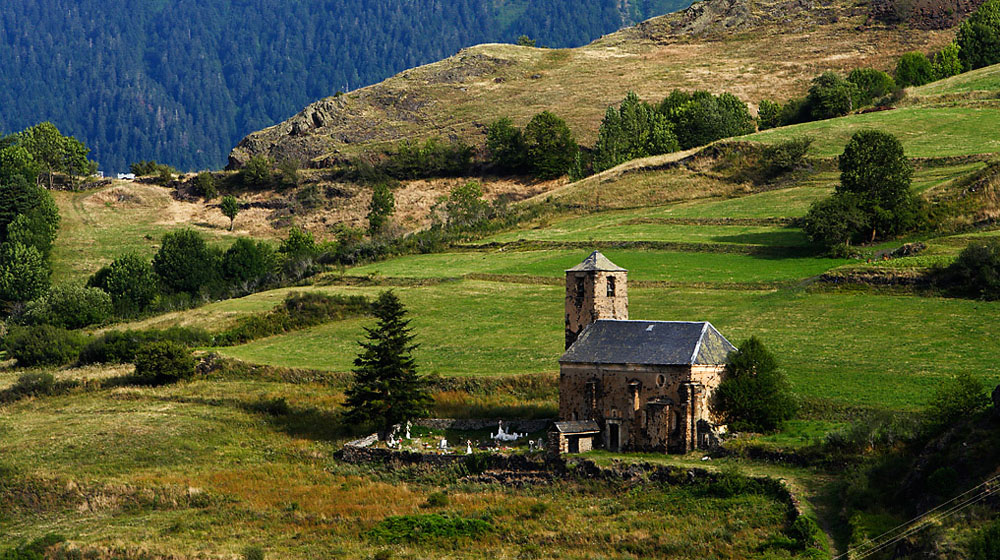
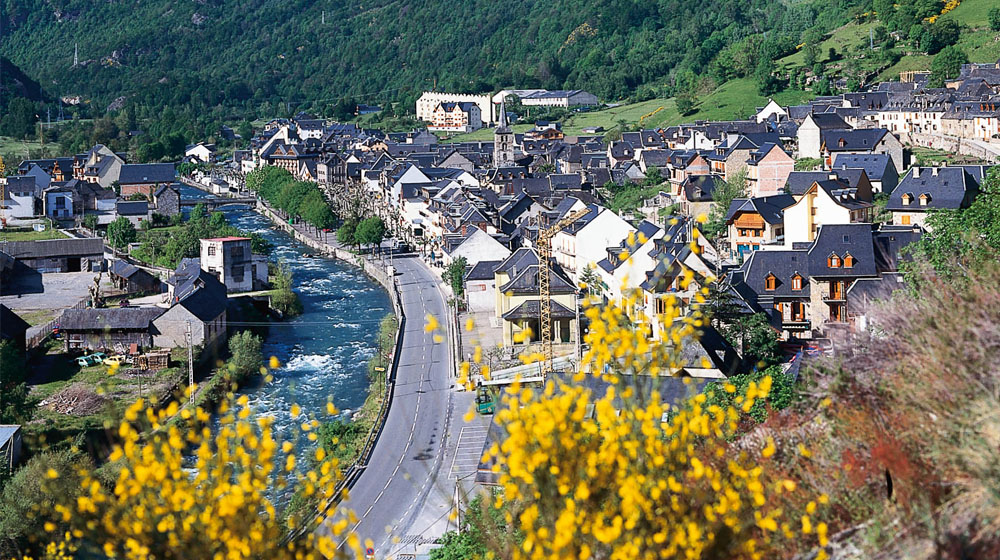
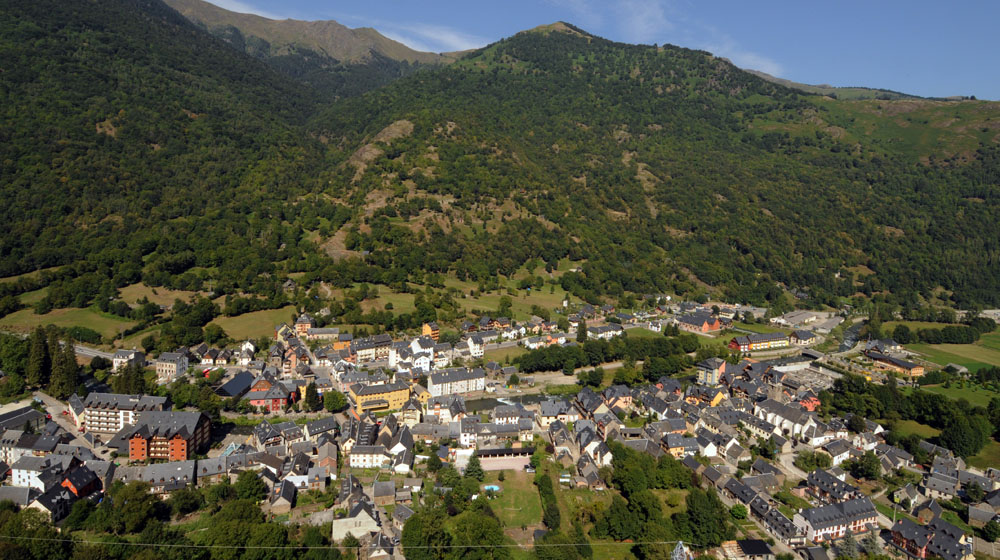
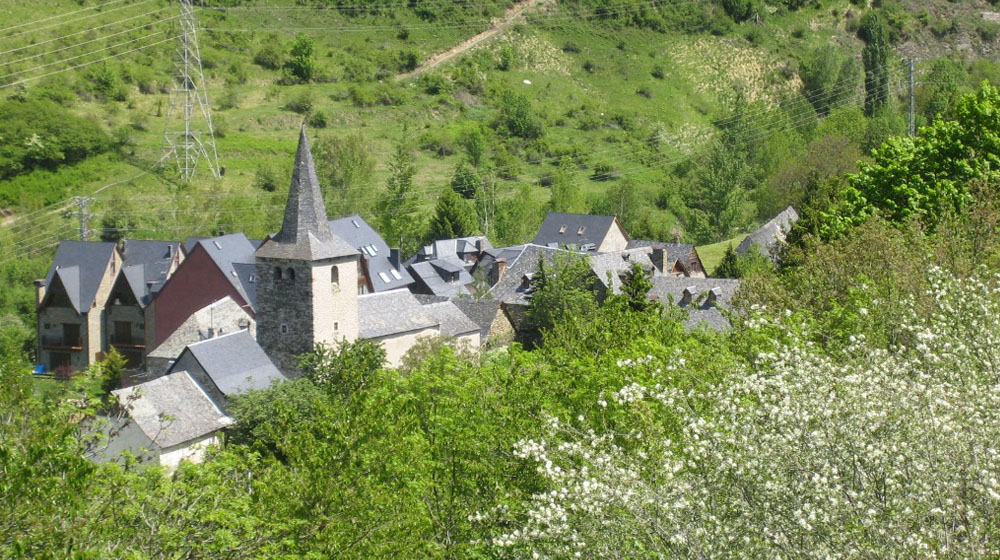
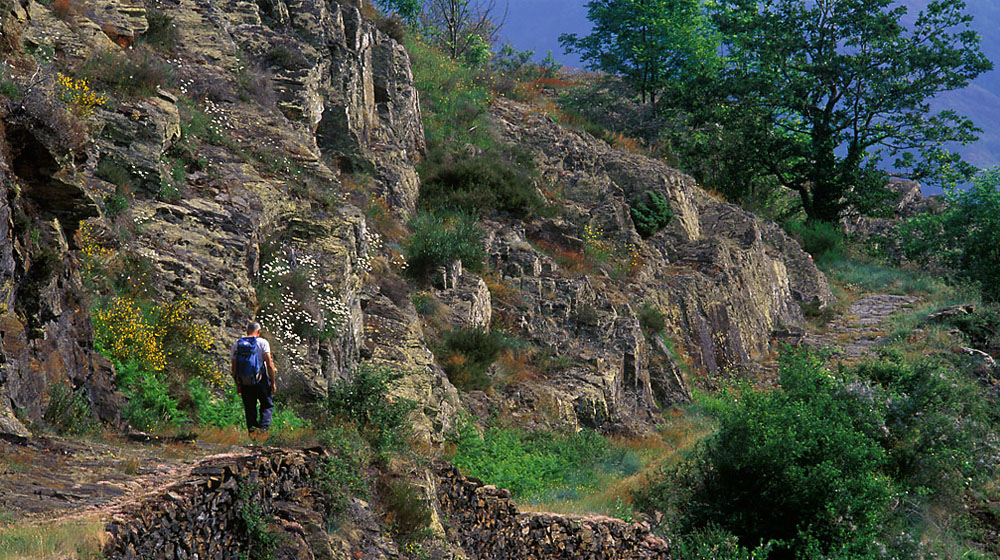
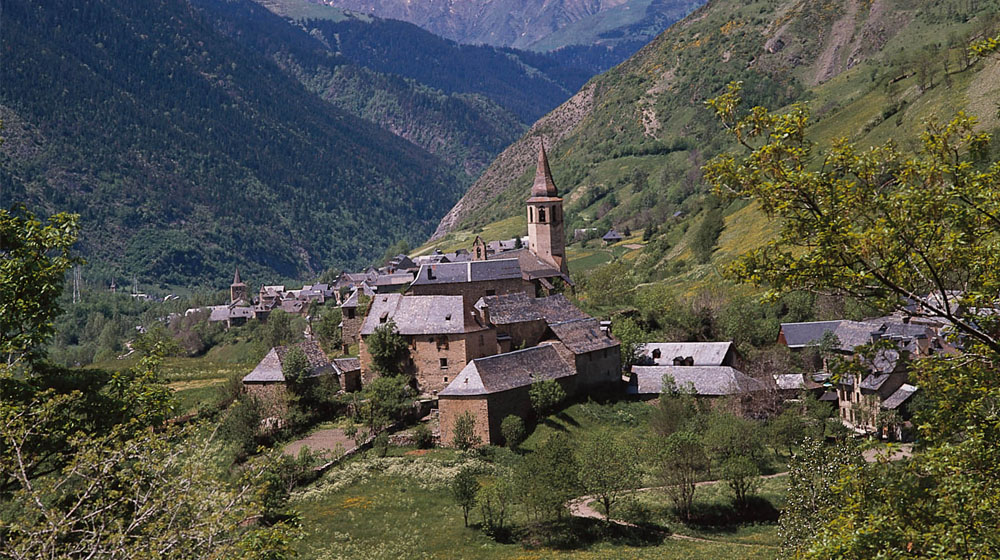
This hike connects the seven villages of the Lairissa Terçon (region) located in the Uishèra Mountain range. These are the oldest and least inhabited villages of the Aran Valley. The rural houses and barns make up the village landscape. Slate roofs with typical lucana windows, fountains, animal troughs and wash basins….all form a part of the enchantment of these villages. The vegetation is very varied: the thick oak forests of Artigaus; the hazelnut trees of Manhaits, streams bordered by cherry trees and the wild pine and fern forests of Uishèra. The visitor will encounter beautiful panoramic views of the Artiga de Lin valley, the Maladeta mountain range and the ridges of the Entecada range.

Detailed Route:

The starting point is the church square of Es Bòrdes. Start by going down the Artiga Street (carrer) (1) to the road and goes to the bridge of Es Bòrdes. After crossing the N-230 highway straight ahead go up the steep slope to the left of the houses. Shortly you will find a crossing with a sign indicating the PR-114 to the left. This trail follows the access road to Arrò (2). Go through the village until you reach a small square. Pass the square and turn to the left on the Sant Antoni street and follow this until the end of the village where there is another sign. At the next crossing (3) take the path towards Arres de Jos (GR-211). Following the wide curves you will arrive to the crossing of “Es Manhaits” (4). Go left towards Arres de Jos. Cross the village of Arres de Jos leaving the chapel of San Fabián behind you and by taking the San Joan street which is quite steep and passes by the Sant Joan church and takes you to Arres de Sus. In Arres de Sus go to the Major (main) square (5) and follow the principal street towards Vilamos. When you reach the last houses turn left to follow the GR trail to Vilamos. On the Major street there is a sign indicating the GR-211 which you will follow. At the first crossing (6) take a left towards Begós and at the second cairn (stone markers) take a left as well. In Begós go down the central street until reaching the town square and continue along the Santa Llucia street and the main road until finding a sign which shows the trail leading to Benós. Follow the Sant Ròc street which goes through the higher and lower parts until reaching the main square (Plaça Major) where the path crosses the first crossing which leads you back to Es Bòrdes.

Recommendations:

Visit the Santa Maria of Vilamos church, the Joanchiquet Ecomuseum, the animal troughs and lime kiln.

Curiosities:

Vilamòs was the first inhabited and recognized village of the Aran Valley. At one point there were more than 500 inhabitants. It is believed that the Sant Miquéu (Michael) chapel, 1 km from Vilamós, was the first parish of Aran – in the 10th century.
Route The 7 lakes of Colomèrs

19

Estanh dera Lòssa | Estanh Major | Estanh de Colomèrs | Estanh Mort | Estanh Garguilhs de Jos | Estanh de Cabidornats | Estanh Long

Technical data

Diffficulty: Difficult

Type: Hiking

Distance: 5,7 km

Time: 5h

Elevation: 360m

Description

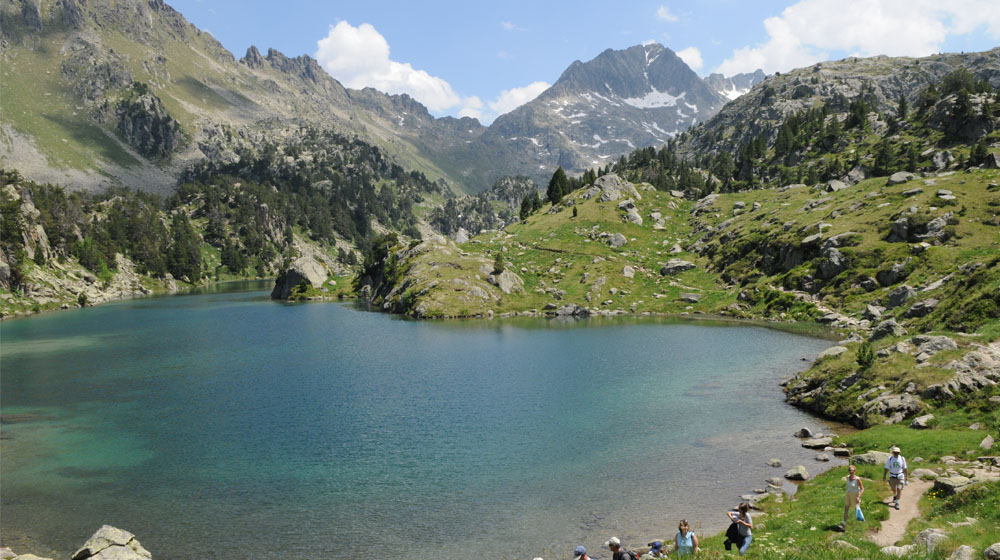
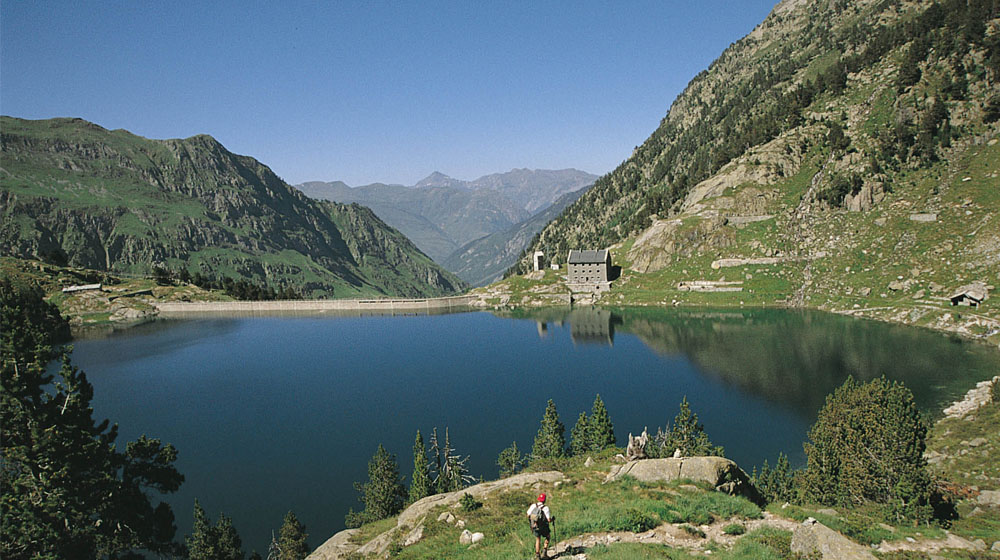
The lake laden Colomèrs basin is a mountain range formed in the shape of a circle which holds in its basin nearly 50 lakes (estanhs). The slow, but efficient process of erosion of ice from the glacier era left behind the legacy of an incomparable landscape. The access to the refuge is worth the effort to get there. The surroundings in this high mountain landscape with high and steep mountain peaks reaching 3000 m in altitude are simply breathtaking. The Creu de Colomèrs, the Gran Tuc de Colomèrs and the Tuc de Ratera are a few of the more emblematic peaks of this range. The proposed hike is a circular route passing by the nearest lakes to the entrance of the Colomèrs basin. You will pass by 7 completely different lakes.

Detailed Route:

From the taxi stop at Montanheta a sign indicates a trail which goes up until reaching the first lake, Lòssa Lake. Once you have arrived to the river take the trail to the right (without crossing the river) until you reach the Colomèrs refuge (1). Leave the dam on your left and follow the trail nearest to the Major Lake of Colomèrs (2) until the refuge. You will go around the lake on a somewhat uncomfortable trail which becomes quite slippery and steep when it rains. You will continue on until reaching the Mòrt Lake and will go around it on the left side. After going up a small canal the yellow marks separate from the red ones. (3) Follow the yellow marks to the left which will take you to the Garguilhs de Jos Lake. You will go around and over the stream coming from the lake. The trail goes up, down and around another stream. To the left below a chasm there is an area of stagnant water. You will go down a small basin and then go up a small hill which will lead you to the Cabidornats Lake. Go around the lake on the left side following the yellow marks until you reach the Long Lake (4). Continue along on the left to the beginning of Estanh Lake (5) and later turn left on the GR which leads to the Còth de Clòto pass where you will see the Clòto de Baish Lake. After passing over the saddle you will descend until the trail splits. Take the trail to the right until it joins the first crossing next to the river. Walk the last part of the trail until the stating point.

Curiosities:

The glacial lakes were formed when the glaciers withdrew from the great basins leaving behind large chasms in the earth which have now converted into lakes. The stones and boulders scattered throughout the landscape were at once part of great slabs of granite which were moved by the retreat of the glaciers. The gentiana flowering plant (genciana acaulis) with is violet blue colour is a plant which buries its roots underground and from one plant spring forth a number of flowers scattered about. It is interesting to note that the first flowers take 12 years to bloom. Another plant from this area known as aconite (aconitum napelus) is one of the more toxic plants known to be mortal even in small doses. It is used as a painkiller in cataplasms for gout or rheumatism.

Estanh Restanca

16

Pontet de Rius | Restanca | Raspes de Rius | Barranc de Rius | Pontet de Rius

Technical data

Diffficulty: Difficult

Type: Hiking

Distance: 5,5 km

Time: 3h

Elevation: 440m

Description

In the village of Arties the Valarties valley begins. Its green fields contrast with the coniferous forests and the imposing peak of Montardo. The itinerary is a introduction to hiking in the high mountain region between precipitous peaks, rock fields and lakes. It is part of the hike up the Montardo Mountain. You will hike through fir and black pine forests laden with intermittent berry bushes and red elders. Plants such as the rhododendron stand out with their red flowers at the beginning of the summer and the blackberry and raspberry bushes also flourish in this area. These are a favourite for the local fauna. The forests are full of animals such as the wild boar, the roe deer, fox and the marten. Outside of this area and at a higher altitude the most abundant animal is the chamois (a goat like animal). Next in number are the marmot and these are followed by the restless stoat or short tailed weasel.

Detailed Route:

Starting point is the Pontet de Rius passing by the cabin turn left following the GR-11 marks. The trail ascends an irregular path although well defined which sweeps through the thick forest of pine and fir trees. Upon reaching the top of the first ascent take the trail leading to the right and continue along progressively gaining altitude. The dam of the Restanca lake becomes visible once the forest opens up and you reach the lake itself. The Restanca refuge is on the other side of the dam (1). Behind the refuge you will see the steeps cliffs of Agulhes deth Montardo. The itinerary continues without crossing over the dam. The GR 211 goes to the right and goes over a small pass. The trail follows the base of the Tossal del Mar. There is a descent of about 100 meters to reach a small valley where you can see the exit point. You will hike along a small rock field still following the GR marks and you will traverse alongside the Raspes de Rius. Where the trail approaches the river leave the GR (2) to go to the right looking for the Barranc (ravine) de Rius. Cross the river on a large stone slab and continue along a trail at times well marked and other times covered with grass and flowers while descending the Rius Valley. Passing the Rius cabin the cairns (rock markers) are more visible taking you finally to the starting point.

Recommendations:

Take the time to reach the Mar Lake or the Cap deth Port Lake. Consult with the refuge keepers before beginning these excursions.

Curiosities:

The remains of buildings and tunnels from the past are remnants of constructions begun in the 40’s to bring the mountain’s waters to the hydroelectric centre of Valarties. This was an immense project with dams and 19 km of tunnels and galleries connecting the lakes to the heart of Valarties and neighbours of Colomèrs and Saboredo. The rhododendron (rhododendron ferrugineum) produce irregular shapes yellow in colour called “agallas”. They are like tumours provoked by insects, fungus or bacteria and serve as the plants’ defence against intruders. The “marmot oil” is the oil from the macerated rhododendron. It is often used as an anti-rheumatic and anti-inflammatory medicine. The chamois is the most characteristic mammal of the Aran Valley. It lives between 1000 and 3000 meters above sea level. In the winter they descend to the top border of the forest and in the summer they go up the mountain in search of the best pastures and snow covered areas.

Saubaga, a stroll through Lower Aran

5

Bossòst | St.Joan Crisòstom | Carretera deth Portilhon | Bossòst

Technical data

Diffficulty: Difficult

Type: Hiking

Distance: 5,4 km

Time: 2h 40′

Elevation: 450m

Description

This itinerary takes the hiker along old trails and paths around the village of Bossost. You will enjoy an incredible landscape with a very varied vegetation typical of the mountain terrain: chestnut, oak, alder and maple trees abound and on the path to the Portilhon you will find beech tree and fir tree forests with excellent views of the Tùc dera Entecada (Entecada Peak) and the Tuc de Mieidia (Mieidia Peak) along with the village of Bossost and the Montlude mountain ridge.

Detailed Route:

Starting point is the patio of the tower of the Saint Mary church of Bossost. Take the Sant Joan Crisostom street across the village towards the mountain along the narrow streets until you reach the St. Joan Crisòstom chapel. Continue until there is a split in the road with a sign and take the direction of “Itinerario de Saubaga” along the Casteràs ravine. (1) Follow along uphill and leave the trail taking the barely visible path ahead between the field and the ravine which soon becomes a more visible trail. At the next split in the trail go left on the rock cobbled trail in a hazelnut tree forest. The ascent flattens out and the trail widens. After various ravines and old remodelled barns you will arrive to a cross with a forest road which comes from Portilhon (2). Take the road to the left and follow the PR indications. An easy descent begins which leads to a crossing indicated as “Camin de Saubaga, Bossost (3). Take this trail going down a steep slope (be careful in the autumn and spring) which takes you to the Portilhon road (4). You will reach the trail again on the left hand side following the PR marks. After crossing the Samorera ravine you will arrive once again to the village of Bossost.

Recomendaciones:

A must do while in Bossost is taking a walk along its pleasant and welcoming streets and visiting its shops. A visit to the Romanesque church of Santa Maria of Bossost (XII century) is one of the most beautiful examples of pure Aranes Romanesque style.

Curiosities:

Surrounding Bossost you can find 6 different chapels (originally there were 7). Following the tradition, they were built to keep the villages free of the cholera and plague epidemics. Crossing the Garona River you will find the old “bocard” or mineral washing basin. The raw minerals were transported along an aerial cable system with an elevation drop of 610 m and a distance of 2200 m from the Victoria Mine.

Along the Footsteps of the Past

4

Les | Bausen | Les

Technical data

Diffficulty: Moderate

Type: Hiking

Distance: 8,3 km

Time: 3h 20′

Elevation: 310m

Description

The itinerary passes through shepherding land, between retaining walls and barns which appear in hidden corners and makes one remember the life in times past of the Aran Valley. The path travels through old oaks and thick forests full of a variety of vegetation. The “Guardader de Vernet” surprises with its excellent panoramic view of the Baish (lower) Aran and its image of the saint hidden in a log as well as its refreshing river in the Bausen ravine. The peculiar village of Bausen where it seems as if time doesn’t pass is worth a visit. Following the village you will certainly enjoy the magnificent fields of the Era Lana de Les.

Detailed Route:

Starting point is the town hall square of Les. Go to the N-230 highway in direction to France until finding the asphalted road on the left before the hostel. At the crossroads you will follow the GR-211-2 towards Bausen. Further along the road splits and you will continue to the left looking for the GR marks which indicate a rock cobbled path which goes up and zig -zags between retaining walls, fields and barns. After passing two buildings and an animal trough you will continue along the path which goes up to the left until reaching another crossing. Follow this to the right in the direction of Bausen and shortly you will reach the “Guardader de Vernet”. Continue along a narrower trail which flanks the mountain. Soon you will re-enter the forest and arrive to the Bausen ravine. Continue until you reach the next crossing and then travel along the forest trail to the right until reaching Bausen. From the San Pere street take the Santa Eulària street which goes to the right and after take the path which goes down to the left to then depart the village. To the right you will see the Santa Anna chapel. Continue down the path which crosses the road to Bausen on two occasions. Upon arriving to the N-230 highway cross it and take the local road until you cross the Garona River. You will return to Les along the GR-211 passing by the San Blai chapel and the old Les Baths.

Recommendations:

The Haro Square in Les and the Hot Springs of Baronia.

Curiosities:

The tradition of the burning of “The Haro” in Les continues today. In this ceremony a large log opened with wedges is stood upright in the square with its same name (Haro). This is done in honour of Saint Peter adding a flower wreath to the log. The following year the Haro is burned the night of Saint John during a grand annual party. Long ago the roofs were made with straw. They had a thickness of up to 80 cm which became a good insulator in the winter. In addition to breathing well this straw helped in the conservation of the grass inside the barn. It could last up to 45 years. The steps which were normally oriented to the north or east had the function of protecting the grass from the wind and rain and they permitted rooftop access for maintenance and fire prevention. Fires were the principal cause of the change of the rooftop materials of the Aranese houses at the end of the XIX century going from straw to slate.

The Paliàs Path

6

Bossòst | Camin des Plaiàs | Les | Bossòst

Technical data

Diffficulty: Moderate

Type: Hiking

Distance: 7,8 km

Time: 3h

Elevation: 380m

Description

This itinerary offers a route between the villages of Bossost and Les. The first half is along the Paliàs Path in the mountain area known as Malh Blanc with varied vegetation predominated by hazelnut and birch trees. As the slope changes its steepness there is more shade and you will find beech trees. The views towards the Montlude mountain ridge and the Uishèra Mountain are remarkable. The return is along the valley adjacent to the Garona River on a comfortable and easy trail. The nearness to the French border has encouraged these villages to develop strong historical and commercial relations with France which still continue today.

Detailed Route:

Starting point is the Bossost church square. Take the Carrer Major street until you reach the Sant Roc chapel. Continue ahead until seeing a yellow marker. Continue the ascent on an isolated rock cobbled path. On the ascent you will find several splits it the path towards the left. Take the rock cobbled path upwards that has the wooden hand rail and which passes a fountain. The path narrows and widens due to the access trails to the new remodelled farm houses. You will cross two streams. After crossing the second stream you will come to a farm house (on the left) which can be identified by two large rocks placed on the trail entrance. Just following this marker take the trail which is not very noticeable and which zig-zags rapidly up the hazelnut tree forest. Go up the last part of curves and the trail continues going through a beech tree forest. After passing a few old barns you will descend the mountain passing several streams. An old barn covered with vegetation marks the forest end. Take the trail to the right which reaches the cement Serís Bridge and crossing a wide trail (1) you will go down path in the centre on a steep ramp. You will enter Les on the Benqué road. Cross the N-230 highway ahead and cross the Garona River. On the right of the river bank you will see the Les Residence, a park and camping area. Follow the red and white marks of the GR-211 of the “Camin Reiau” following the Garona River will take you to Bossost.

Recommendations:

On your way to Bossost along the “Camin Reiau” just besides the Cledes hydroelectric centre there is a fish hatchery of Sturgeon fish specializing in the production of caviar. Guided visits are available.

Curiosities:

In the Aranese the term used for barn is “borda”. A “borda” is a building inside or outside the village used in the winter to store hay and as a stable for the animals while in the summer the “bordas” in the mountains where shelters for the shepherds when their livestock was grazing freely. The hazelnut tree which can be found along the majority of the itineraries was largely used in this valley to build all types of baskets due to its strength and flexibility.

A riverside hike in the Castiero villages

14

Vielha | Escunhau-Casarilh | Vielha

Technical data

Diffficulty: Moderate

Type: Hiking

Distance: 8 km

Time: 2h 40′

Elevation: 300m

Description

This itinerary follows part of the trail which goes up to the old ski resort, La Tuca. The trail passes through a shady forest rich in ash, maple and oak trees until reaching Escunhau and Casarilh. From this trail one can view Vielha located at the crossing of the Nere and Garona Rivers from an excellent aerial viewpoint. The return portion along the sunny side is on a well positioned trail above a rock laden hillside between pasture lands and open fields with a variety of shrubs (blackthorns and hawthornes – crateaegus monogyna) and rose bushes joined by the lullaby of the river.

Detailed Route:

From the Plaça de Vielha dera Gleiser go up the street Sarriulèra. Outside the village, in the crossroads, take the GR-211-1 on the left, which amounts to the visible antennas. It continues to the junction and take right track Tuca forestry. On the way down the runway is the Costassa, a lawn with tables and a fountain that invites to stop and refresh. Continue along it to a crossroads that says “Estanhot d’Escunhau.” Follow the diversion of the left of the label for brands GR. You get to the people of Escunhau at the height of the Romanesque church of Sant Peiro. It is right by the GR. At the next crossroads continue Casarilh address. You enter the village and down all right across the road C-28 to a fork that is caught on the left to bind to the GR-211. A nice bridge we can cross the river Garonne. The road gains altitude and Flanking takes a dramatic turn Vielha, near the new sports hall and Palai of USG. Follow the right bank of the Garonne river to a wooden bridge. It borders the Hospital and the street Arnals you get the point of departure.

Curiosities:

The Vielha church square was the patio of the armoury of the old Vielha castle built near 1345 as a common fortress for the consuls of Vielha, Gausac and Casau. It was built during the Guerra dels Segadors in 1613 (the war of the harvesters). Before arriving to Escunhau in the area known as Castièro which gives the name of the region “terçon” there was another castle of which today there are some remains. The ivy which can be found in abundance in these parts of the valley climb trunks of old trees with their adherent roots. Being perennial plants they stay green throughout the year growing curiously on all types of deciduous trees.

Mina Victòria

7

Arres de Sus | Bassa d’Arres | Mina Victòria | Bassa d’Arres | Arres de Sus

Technical data

Diffficulty: Moderate

Type: Hiking

Distance: 5,1 km

Time: 2h 15′

Elevation: 360m

Description

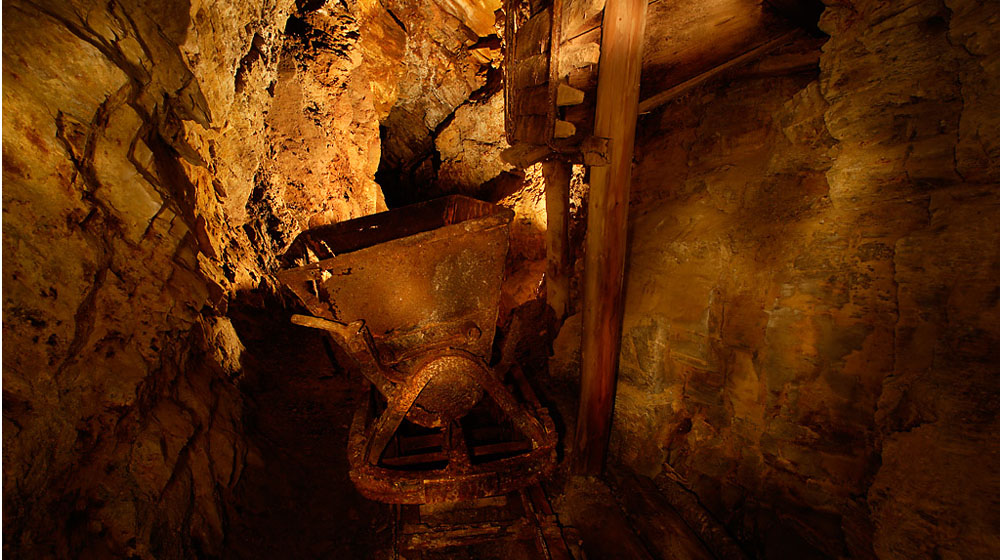
This route shows the visitor the dificult work conditions the miners experienced during the first half of the XX century. It is a bucolic route through fields, gullies, steep black pine and fir tree forests with spectacular views. A part of the route one can see the surroundings of the mines: the lookout, the foreman’s house, the buildings where the workers lived, the latrine or the remains of the cable railway used to transport materials. The machine room is the starting point for the guided visits in the summer. The return is on a trail prepared with logs and follows the entrances of the superior galleries which follow the principal seam of the mine. To make the last ascent worthwile there is a picnic area in the Arres Pond (bassa) where a good observer can distinguish the newts of the tadpoles before returning to Arres de Sus.

Route:

Strating point is the Plaça Major de Arres de Sus going up the ramp of Camin des Prats leaving the Glèisa of Sant Joan to the right. You will pass the last houses and at the split of the path take the trail to the left which crosses the forest road and the pastures several times until reaching the Victòria Mine itinerary which is well sgnalled. Go gradually downhill to the exploitation area, where the Machine Room is the location for the visitor centre. After visiting these buildings you will continue going up log based steps following the different galleries and mine entrances. You will cross various ravines and following a fir tree forest you will arrive to the Bassa de Arres. Follow the forest road down until you find the path uphill and then return once again to Arres de Sus.

Recommendations:

A guided visit to Sacosta Gallery of the Victòria Mine. ( The guided visits are only in the summer season).

Curiosities:

At the beginning of the XX century the zinc and lead exploitation in the area of Arres was significant. In 1912 the Victòria Mine was in full operation. This same year the mineral washing area or “bocard”, of Bossòst was operated basically by women and children who had the difficult job of separating the minerals from the raw material. Beforehand, a selection (sift) of the raw material had been made near the mine which was then transported by mules. This mine was the most important of the valley given that its location allowed it to be operated year round. The newt of the Pyrenees (euproctus asper) is an amphibian species of the Pyrenees. It measures 16cm with a dark brown colour on its backside and rough skin with a slitner of orange on the ventral side. It lives in the cold mountain waters. In mating season they spend hours curled up with one another. The digitalis plant ( digitalis purpurea) is a very attractive plant with clusters of purple red flowers, but it is an extremely toxic plant as well. In medicine it is used in small doses as a cardiac tonic (digitalina) in the case of a heart attack.

The Beech Trees of Carlac

3

Bausen | Ermita de Sant Roc | Bordes de Carlac | Coret de Pan | Bausen

Technical data

Diffficulty: Moderate

Type: Hiking

Distance: 5,0 km

Time: 2h

Elevation: 275m

Description

Bausen is an enchanting village hidden where the slopes of the Vacanera mountain smooth out slightly allowing the establishment of a village with fields and farmland in their surroundings. The approach is made travelling along a local winding road which gains altitude above the Garona River. The village maintains and old love story. The route takes the hiker along the mountain sides on a well marked and travelled path and later enters a spectacular beech tree forest where small remnants of a long ago civilization can be seen such as an animal trough made of big stone slabs, old barns scattered around the mountains or a wooden footbridge. These simply make the trail come alive with history. The hiker will return to the light of the day and the panoramic views of above Bausen and Baish (lower) Aran once you pass the Coret de Pan.

Detailed route:

Starting point is the car park at the entrance of the village and continues along the Sant Pere road where a sign indicates the direction up the steep roads. Continue following the GR marks to the right until reaching the outskirts of the village. You will pass by the San Ròc Chapel and will leave the behind the antennas to the right. The well constructed path will flatten out and as you continue along the forest thickens, but the path does not disappear. Pass by an animal trough and an old barn and you will cross a stream on a footbridge. Further along there is a split in the trail and you will follow the GR to the left where it is more uphill. The majority of the elevation gain is on this section of the hike. You will reach the furthest point of this hike. After a brief rest you will return to the same stream without a footbridge. The trail flattens out until exiting the forest. You will pass the Coret de Pan and continue between the fields with old “bordas” (barn houses) scattered about until you reach the rooftops of the village of Bausen.

Recommendations:

Visit the covered trough in the direction of the Bosc (forest) of Saplan or visit Teresa’s Cementary

Curiosities:

A the beginning of the XX century two youngsters much in love asked the priest for permission to get married, but due to the fact that they were related he was unwilling to grant their wish if they didn’t pay a “dispensa” (dispensation) the church required. They were poor youngsters and didn’t want to pay. After many pleas to the priest they decided to live together. They day that Teresa died at only 33 years of age the priest was unwilling to bury her in the church’s cemetery. The entire village united to build a civil cemetery on the outskirst of Bausen for Teresa in a quiet and peaceful corner. The Alpine Chough bird with completely black feathers, a yellow beak and red feet amaze the viewer with its incredible flight as they take advantage of the air currents to do daring acrobatics. They nest above 1800m, are very sociable and when the weather is cold often descend to the lower regions of the valley.

The Corilha Ravine

17

Unha | Barranc de Corilha | Gessa | Unha

Technical data

Diffficulty: Moderate

Type: Hiking

Distance: 3,6 km

Time: 1h 30′

Elevation: 330m

Description

This itinerary connects the villages of Unha and Gessa. You will be taken through a small forest of oak, ash, cherry and hazelnut trees and will pass by pastures close to the villages on the side slope of the Pui de Unha. The peak of which reaches 1000 m above and descends next to the pleasant river which exits from the Corilha Ravine. Here you have an impressive panoramic view of the valley, the mountains, the villages of the Pujolo region and the Maladeta mountain range off in the distance.

Detailed Route:

The starting point is the car park in the centre of Unha. Go up the Carrer Major street until reaching the Carrer Sant Martin street at the end of which begins a fast ascent. After gaining the majority of the altitude of this hike, flank to the side to enjoy the incredible views. Following another zig zagging ascent exit the forest and go up the pastures following the posts with the yellow markers. Pass a rock field and you will soon encounter a crossing of trails with indications (1). Follow directions of the PR-112 towards Gessa. The path is going to head towards the Corilha Ravine and will descend to Gessa. Once in Gessa continue along the Carrèr Riu street until reaching the bridge (2). Go up this street in the opposite direction of the bridge and pass just next to the Saint Pere church and Casa Rosa. You will soon reach the roundabout where another sign will indicate the direction to take to return to Unha. You will enter Unha on the Carrèr Major street.

Recommendations:

In Unha: the Romanesque church of Saint Eulària, Ço de Brastes and the flour mill. In Gessa one should visit the Casa Rosa which is a mansion with an angled tower and Renaissance windows.

Curiosities:

The “terçons” are internal territorial divisions of the Aran Valley. In Unha the Ço de Brastet is a mansion from the 16th century and is one of the civil buildings with a military function most representative of Aran. The lion’s tooth (taraxacum) is a vigorous plant with yellow flowers very common along the paths of Aran. Its soft leaves can be eaten in salads and have cleansing and diuretic effects on the digestive system. It is of great interest in the bee industry worldwide due to the nectar and pollen they produce. The Eurasian Jay is a small bird belonging to the family of the crow and similar in size is easily heard and seen as it flies between the trees. It has attractive feathers, brown in colour with a white spot and blue and black stripes on its wings.