Giant fir route

22

Cabana de Loseron | Coma des Estrets | Cabana de Loseron

Technical data

Diffficulty: Easy

Type: Hiking

Distance: 1,8 km

Time: 1h 30″

Elevation: 185m

Description

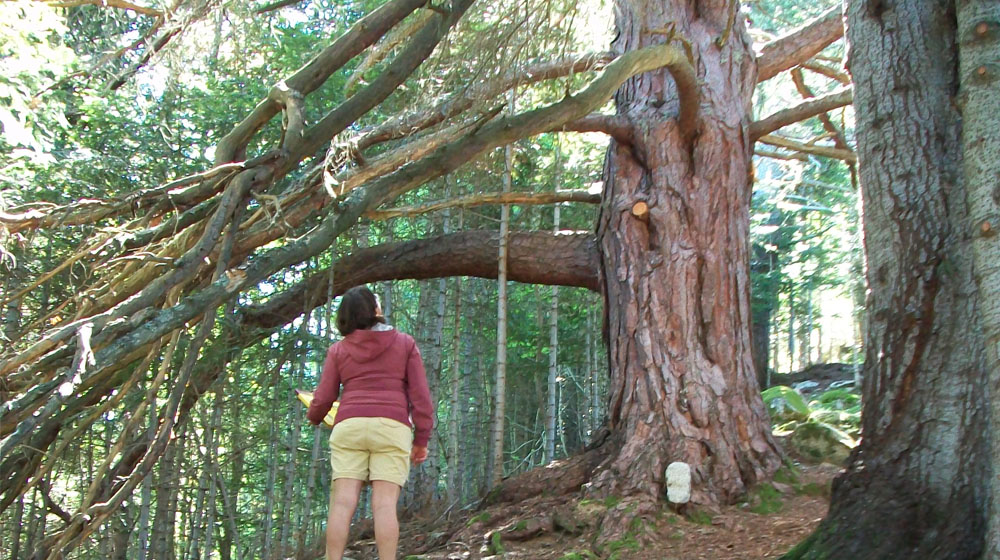
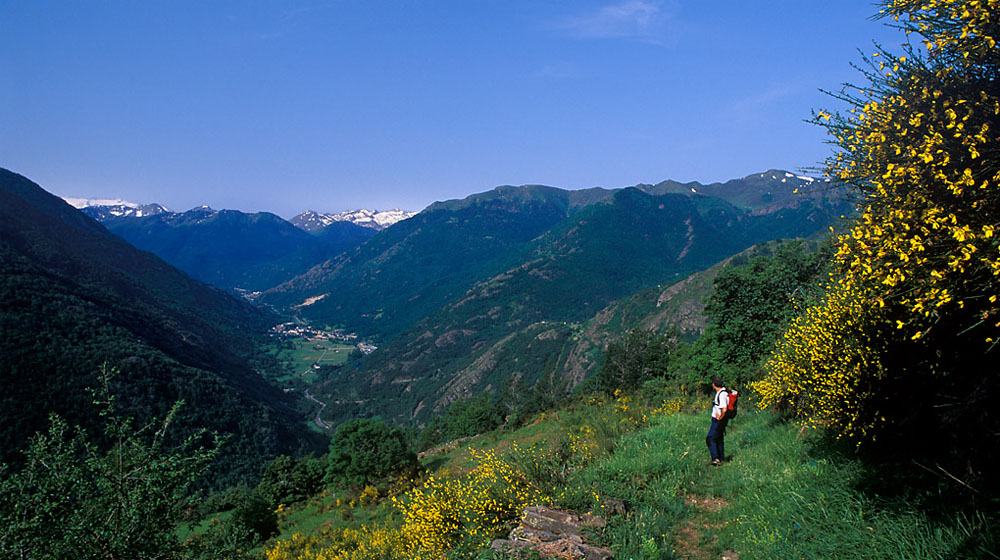
The route is not of great difficult. It is also well signposted, and has 10 panels with educational presentations on the large trees that you will find on your way. The route is in the valley of Valarties (side valley of the Garonne River), within the periphery of National Park and Sant Maurici Aigüestortes.

Detailed Itinerary:

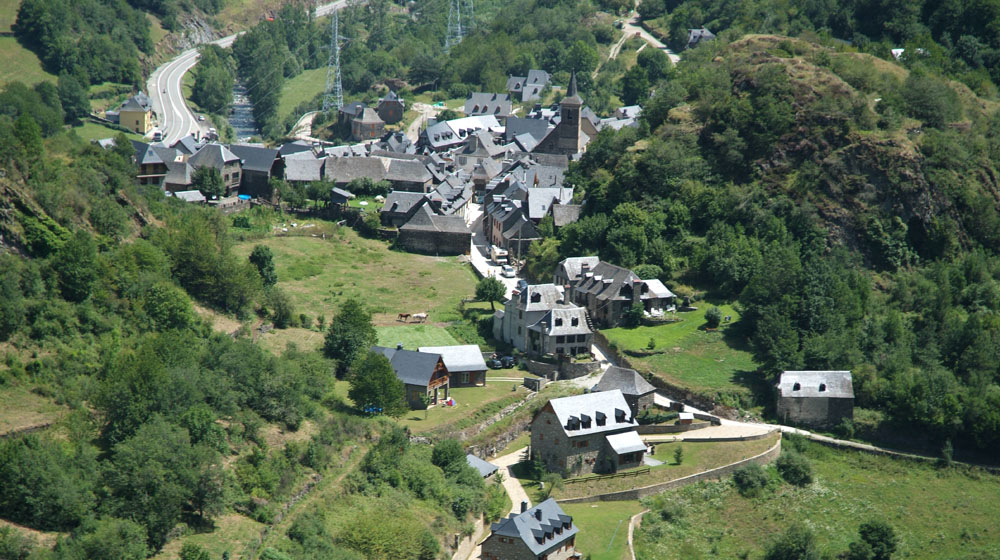
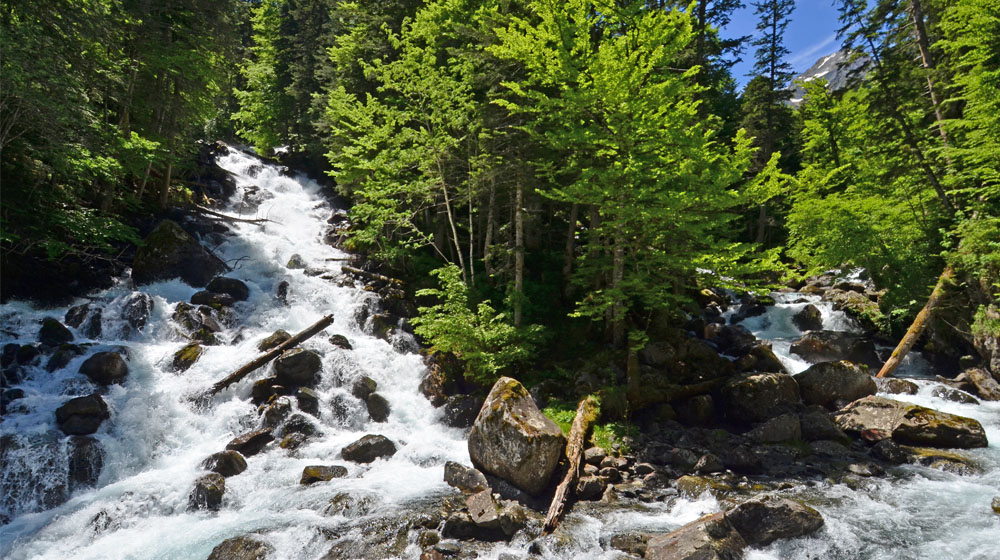
If you start from Vielha, take the road C-28 in the direction of Puerto de la Bonaigua. Upon reaching the height of Arties, take the detour to the right, which is right after finishing the population. Past the first bridge that crosses the river Garonne, you will see before you the Arties hydroelectric plant. Continue right up through the town square of Arties, where you will find the bridge over the river Valarties, cross it, and quickly turn left heading towards the valley of Valarties. After leaving behind the last buildings of the town begins the forest track, which you must follow until you reach the bridge of Ressèc. Here you have the option of taking a taxi up to the cabin of Loseron, or else make the journey on foot down the track for 3 km through a forest of beautiful spruce.
When we find Loseron hut (1,630 meters high), in an environment of alpine meadows full of flowers, on its wall you will see an information panel that explains briefly the itinerary, and in the general colors of the poster you will see the direction you need to follow to start finding the giant spruce. Go down the track a few meters, and passing the small bridge, you will find a first indication of the expected time to do all the itinerary.
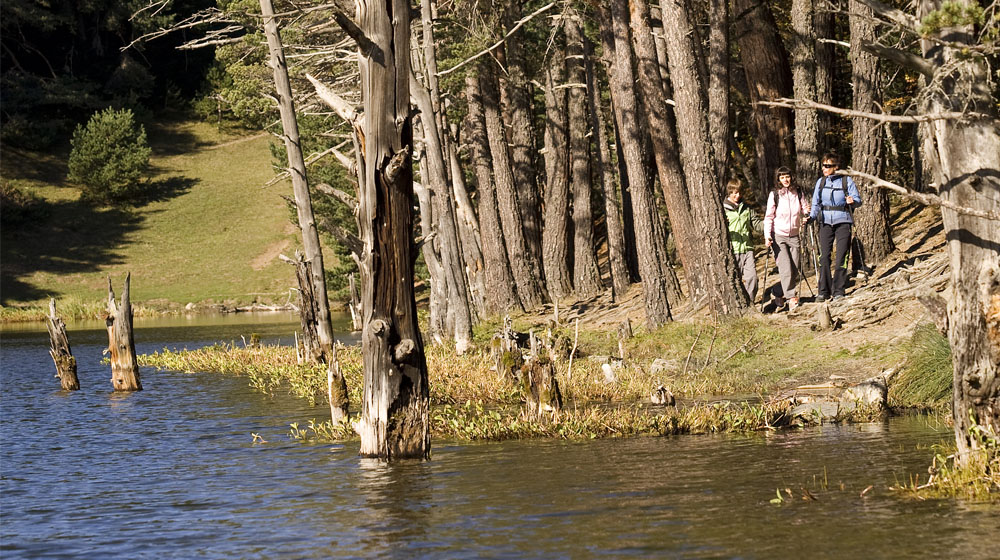
Go through some initial fields and, following the yellow wooden signs, head into the woods. Then take the path of an old canal, and continue straight, without losing any altitude. At one point, on the left, when the signs of broken branches begin to take you up the slope, try to find a large red pine with panel 001, which teaches us how to measure the height of the trees an easy way. From here we will find the rest of the trees and notice boards with different information, interesting facts ..
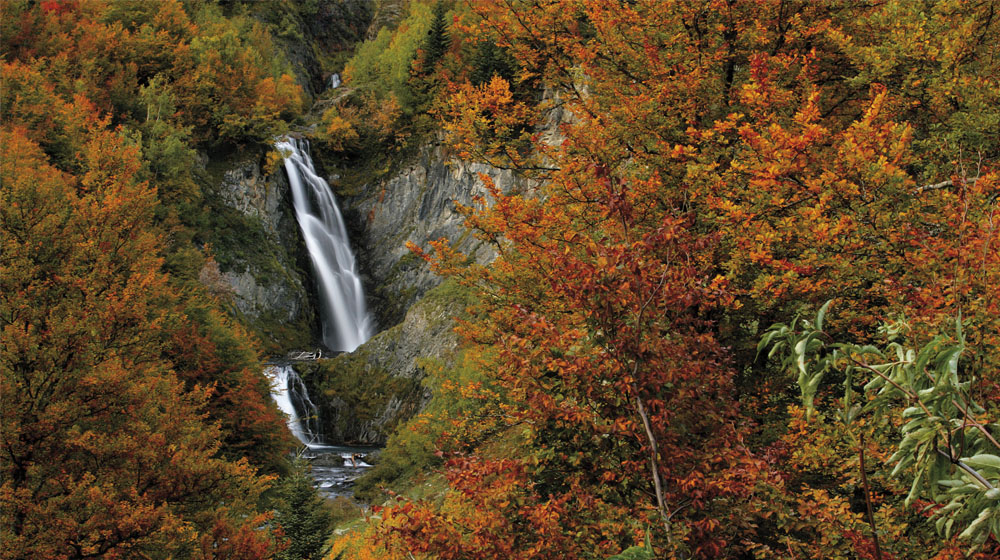
The tree 002 will serve to guide you. In the tree 003 you will see a cross section that teaches how to count the years of the trees. Then you will see two trees that come together in the panel 004, and thus learn to differentiate red pine from firs. Then the panel 005 tells a beautiful story of an old road. Continue straight until you reach a path on the left, where you will find the tree 006, with a beard hanging down. Next to it, your eyes have to get to heaven to see the tall firs of group 007. Further, the panel 008 is in a great tree whose branches form a dense shade, and then the panel 009, a towering tree with its giant roots anchoring to life. Just at this point is where the road turns to reach the last tree with panel 010, which, despite being dead, gives us a lot of indormation about the place. You have arrived! and now you can start the descent on the way down, a little wild and fun at first, but then you just have to go to the tree 006 where we find the road uphill, and follow it. Return to the bridge, near the hut Loseron, where there was the first exhibition panel.

Recommendations:

The bravest can try to gown down straight from the tree 001, looking for the old road to the track. Then, a network of trails made to remove the timber from the forest will lead you to Sieja Meadows, near Ressèc bridge. You have to wear good shoes.

Trivia:

In Arties, past the hydroelectric plant, just after you turn right towards the town, it is worth stopping to see the bears in captivity. If you like architecture, you can enjoy in this town the visits to the church of Santa Maria and the church of Sant Joan, the latter alongside the road.
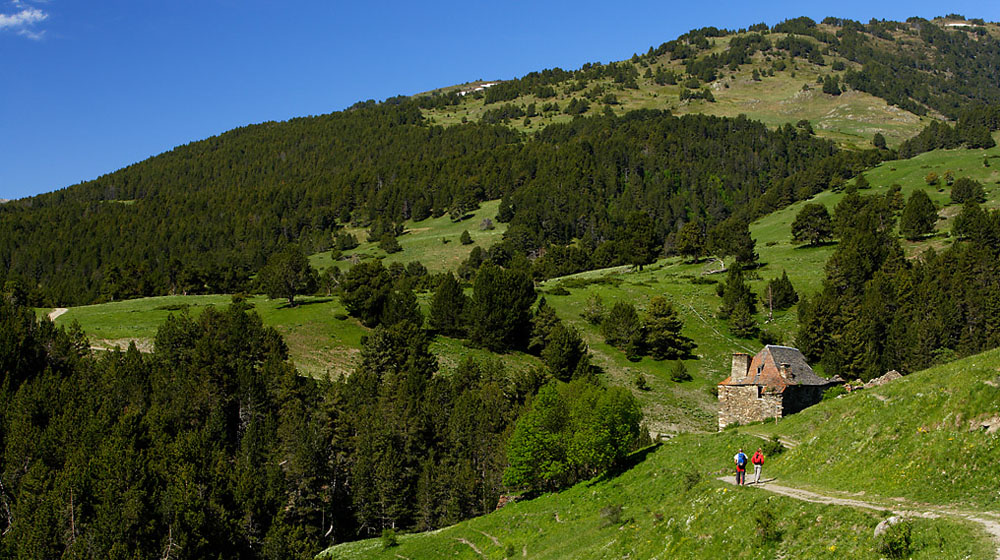
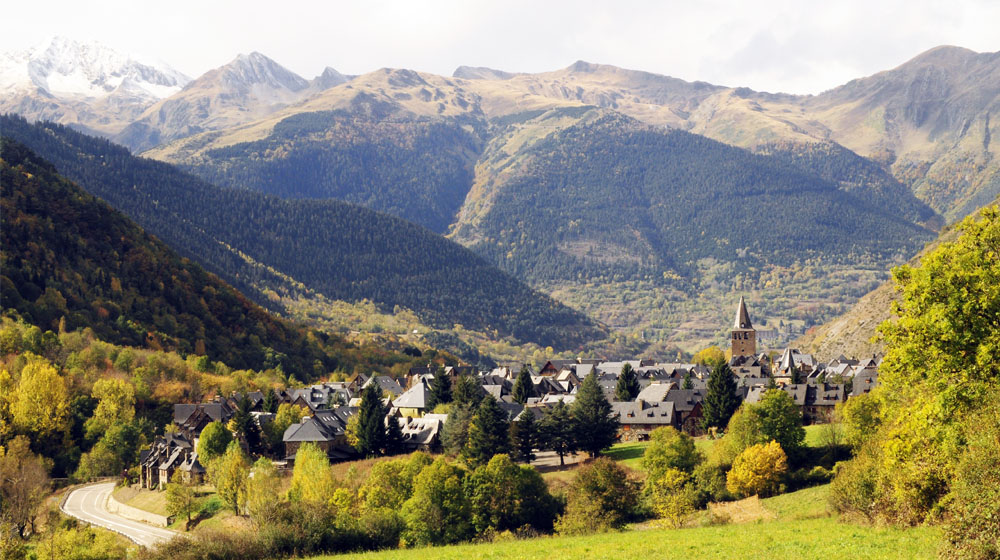
Montgarri, a sanctuary at the limit of Aran

20

Beret | Sanctuario de Montgarri | Montgarri | Montgarri | Beret

Technical data

Diffficulty: Easy

Type: Hiking

Distance: 12,6 km

Time: 3h

Elevation: 200m

Description

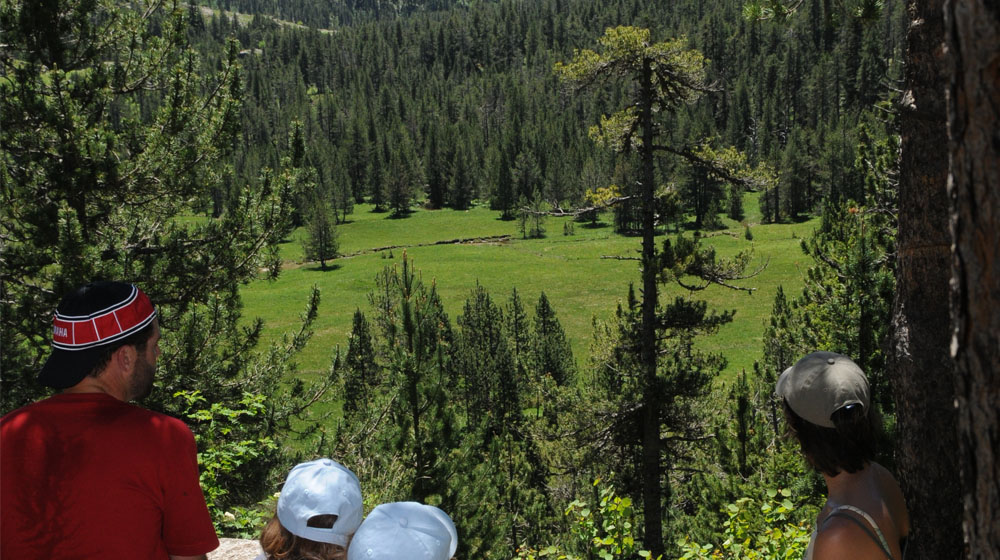
The Beret Flats were at one time the scenario for witches and sorcerers practicing the dark arts on this great mountain plateau at 1850 meters. Here one is witness to significant contrasts from the snow covered mountains and skiers in the winter to the summer pastures full of livestock grazing gingerly in the sun. The area is exceptionally located in that it is the natural border between the Atlantic facing slope to north and Mediterranean slope to the south. The itinerary goes down along the side of the Noguera Pallaresa River (1) and goes through black pine tree forests and pastures until reaching the refuge and Montgarri Sanctuary which are located in an open and sunny spot next to the river. The return portion of the journey is on the forest path on the shady side of the river in the fir tree forest of the Dossau Mountain.

Detailed Route:

The starting point is the car park of the Beret Flats to the left of the large warehouse. You will quickly locate the GR sign. The trail which you will take is well defined, wide and easy. The trail goes through pastures and later enters the forest. You will cross several streams, the Parròs Cabin and the Horcalh River after which you will reach the Es de Cabau barn. (1) Here the trail narrows a bit, but shortly you will arrive to the refuge and Montgarri Sanctuary. Go across the bridge and continue until you reach the ruins of houses of long ago from an old village. This route unites with the trail which comes up from Alòs d’Isil (2). Go to the right. Further on there is a car park indicating the entrance to the Sanctuary from the other side. When leaving the Sanctuary you will continue going up progressively along the forested mountainsides of the Beret Flats.

Recommendations:

The Uelhs of Garona and the Noguera Pallaresa River along with the incredible panoramic views from the Beret access road. The menhirs of the Beret Flat and an excursion to the area of Orri where the Malo river appears and disappears are worth visiting. In Montgarri, if you cross the Noguera Pallaresa you will find some marvellous ponds and waterfalls.

Curiosities:

The image of the Montgarri Virgen was discovered by a shepherd who watched as one of his cattle knelt down each day in the same spot at which time he decided to go investigate. To his surprise he discovered the image and Montgarri was named the patron saint of the shepherds and to whom they built a chapel. The Sanctuary was later built.

Along the bank of the Garona in the villages of Naut Aran

15

Gessa | Arties | Garòs | Arties | Gessa

Technical data

Diffficulty: Easy

Type: Hiking

Distance: 8,4 km

Temps: 2h 30′

Elevation: 150m

Description

This is a very pleasant hike even though it appears to be lengthy. Due to the variety of things to see the trip is made shorter. The marvellous villages that you will walk through are worth dedicating some extra time to visit because with or without monuments there isn’t a single village in the valley that doesn’t surprise the senses of the visitor. The first half of the trail which is sunnier than the return trail offers a large variety of vegetation spread out between the pastures with blackberry, hawthorne and blackthorne bushes. The return trail is also a delightful hike with the shade of the poplar, ash and maple tree forests where there is an abundance of boxwood, honeysuckles and wild strawberries.

Detailed Route:

Starting point is the Major square of Gessa. Go down along the street of the church until reaching the Corilha Ravine (1). Cross the bridge following the direction of the GR-211 in the direction of Arties. Don’t cross the C-28 road, but follow alongside it until reaching the San Joan church and then continue on the street which runs parallel to the C-28. Then connect to the dirt trail after passing the last houses and follow along with little elevation change until reaching Garòs. Take the Carrer deth Solei street until reaching the Major square and then take the first left on the Carrer de Poladeres street until crossing the C-28 road on a rock bridge over the Garona River. After the bridge you will be on the “Camin Reiau” or royal path and the GR-211-1. This trail goes up the other side of the river until reaching Arties having left behind you on the right hand side an old lime kiln and the ruins of the Arties Baths. You will cross the Valarties stream and on the left you will reach the Urtau square. Without crossing the river you will continue along on the Carrèr dera Mòla street until exiting the village. Continue straight ahead without crossing the bridge leaving the hydroelectric centre of Arties on the right. Go up a trail and after passing a house on the right the trail becomes an enchanting narrow trail (GR) until reaching the forest path Mont-Romies. The signs indicate a left turn to cross the Garona River and to go back towards Gessa along the Corilha ravine.

Recommendations:

The Romanesque church of Saint Mary, the Urtau Square, the monument and chapel dedicated to Don Gaspar de Portolà, the Sant Joan church where many interesting expositions are held and the bear enclosure adjacent to the squash courts are all of great interest in Arties. In the direction of Garos, a side trail will lead you to the Saint Jaime chapel. This visit could be an added attraction to the journey.

Curiosities:

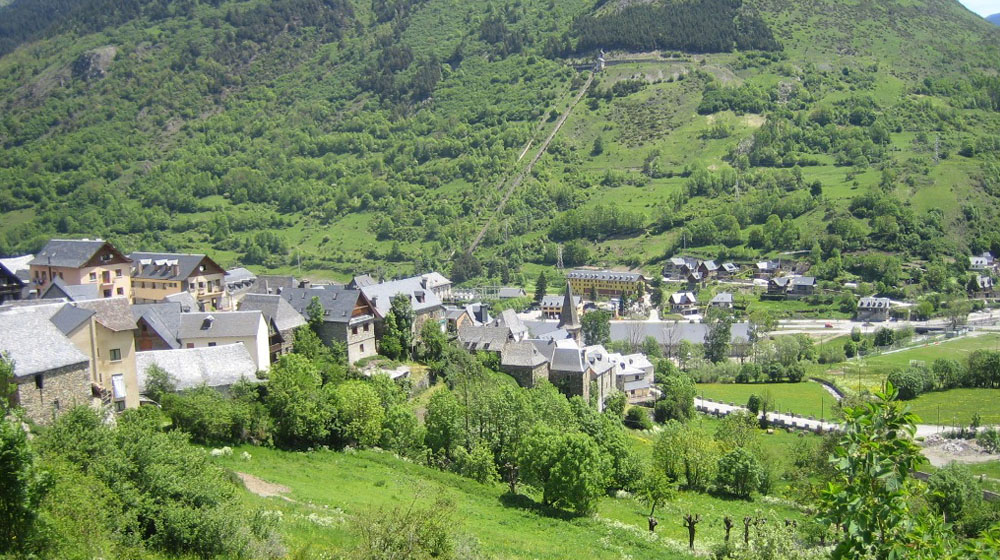
Arties is the largest urban nucleus of Naut Aran (a territorial division) and is located at the intersection of the Garona and Valarties Rivers. Set in a beautiful valley overlooked by the majestic Montardo Mountain. Its peak reaches 2833 m. Although it is not the tallest peak in the valley, it is the most emblematic. In 1937 and in 1963 the Garona river flooded and took with it tree trunks, logs, trees and rocks as it caused significant damage to the village.

Camin Reiau

11

Aubèrt | Camin Reiau | Es Bòrdes

Technical data

Diffficulty: Easy

Type: Hiking

Distance: 7,5 km

Time: 2h

Elevation: -125m

Description

This is a pleasant walk between Aubèrt and Era Bordeta which takes place on part of the Royal Path along the base of the Gèles ridge and at the beginning of the Varicauba forest. The hike will take you to the village of Es Bòrdes and once you have crossed the Joeu river you will go along the base of the Entecada ridge. The hike is full of typical vegetation from the river basin with pine, fir and hazelnut trees. Of significance one will also find moss, boxwood bush and plenty of floral and plant diversity in this area. As the seasons change so does the botanic variety. The water from the ravines feed into the Garona River in form of small waterfalls along the trail. Nature is combined with other resources of the valley such as the camp grounds, the hydroelectric station, farming and carpentry along the trail.

Detailed Route:

Starting point is in Aubert in the car park of the picnic area reached after having crossed the Garona River. (1) This hike follows the direction of the river along the asphalted road. When the road splits off to the left (2) go to the right following the “Camin Reiau” and GR 211-1 signs. This is an easy and comfortable dirt trail. You will pass by the Arros bridge on the right which is next to the first camp ground. You will soon pass by the second camp ground and the hydroelectric station of Benòs. The trail will take you to the village of Es Bòrdes where the hiker can quench his thirst in one of the many fountains scattered throughout the village. Cross the village following the signs and after a steep downhill you will cross the rock bridge over the Joeu River. The trail flattens out and passes through beautiful fields and pastures along with an old covered wash basin. Different camp grounds indicate the proximity to Era Bordeta. Cross the Garona River on the bridge which will take you to the N-230 highway at which time you will have arrived to the stopping point of the excursion.

Curiosities:

The “Camin Reiau” is an old path possibly used in the period of the Romans who came from Toulouse passed through the Aran Valley until reaching the Bonaigua Pass and then moving on to Tarragona. On a small hill next to the Es Bòrdes village was located the Castèth Leon (a fort of strategic importance) built in 1283 and which served as the seat of the Aran government. At the foot of this fort the village of Es Bòrdes was built. In the 18th century the fort was besieged, burnt and destroyed. An emblematic bush of this trail is the boxwood bush (buxus sempervirens) which has very hard, dense and homogenous grain used to make pipes, kitchen utensils and wind instruments. It is also a medicinal plant, but highly toxic. It is often used in arts and crafts given it can be cut into various forms and used as garden ornaments.

Aigües Tòrtes de Colomèrs

18

Banhs de Tredòs | Cascada d’Aigües Tòrtes | Mirador | Banhs de Tredòs | Pònt dera Montanheta | Crotze de Colomèrs

Technical data

Diffficulty: Easy

Type: Hiking

Distance: 7,8 km

Time: 3h

Elevation: 200m

Description

The best phrase to define this corner of Aran is “ beautiful views any time of the year”. From the starting point at the Aiguamog valley we see the many features of this area: pastures, fields, forests, rivers and high peaks serving as appetizer for the largest mountain basin of the Pyrenees – The Colomèrs Circ. This itinerary offers a pleasant hike where one can discover one part of this valley which is on the periphery of the National Parks of Aigüestortes and Saint Maurici Lake. You will enter the forest following the river until reaching a waterfall. You will then take a manicured and interesting path until you arrive to a lookout point where you have the panoramic views of the grand Colomers Peak (2.933m) and looking down you will see the swamp and protected river area of the Aigües Tortes of Colomers. The return journey will take you past old barns, pastures and livestock.

Detailed Route:

The route begins at the end of the car park of the Tredos Baths. A sign indicates the Camin dera Montanheta (Montanheta Trail). Lazily following the river this trail is surrounded by a variety of floral vegetation. The trail will lead you to a waterfall. You will go up until reaching the Aigües Tortes cabin next to the path where you will find a sign encouraging you to follow the trail adjacent to the river. The trail goes back up through the pine and fir tree forest first until reaching a log bridge and later until reaching a lookout point which is slightly off of the trail to the left. After a few short uphill ascents and downhill descents you will exit the forest and take the path (1) to the left which will lead you to the Pont dera Montanheta and the picnic area. Continue along this comfortable trail until reaching the starting point.

Recommendations:

A visit to the Tredos Hot Springs is a must. Don’t forget your swim suit as the outdoor pool has warm thermal water!

Curiosities:

With the recess of the last glaciers from the last glacial era, the lakes were formed in the mountains’ basins which over time filled up with sediments until they became flat. The rivers or streams began to spill out from these lakes creating varied forms at the base of the valleys. These varied or twisted shapes are the reason for the name Aigües Tortes which translates to mean “twisted waters”. The roe deer is a mammal from the deer family that lives in the forest and from which it rarely leaves. The male has small horns with three points which change every year. The female in the only one of its species with delayed fecundation: after mating the female has the fecundated egg and can wait to develop it until the external conditions are most favourable. The yarrow (achillea millefolium) flower grows in the pastures and on the edges of the trails. It has been known since the time of the Romans. The soldiers always carried some of them in their bags for their power to help heal cuts. In infusions the yarrow plant is used to treat ulcers and gastritis.

A walk of contrasts in Mijaran

12

Vielha | Vilac | Pònt de Beussa | Gausac | Vielha

Technical data

Diffficulty: Easy

Type: Hiking

Distance: 6,1 km

Time: 1h 45′

Elevation: 150m

Description

This itinerary offers a varied route to get to know Vielha and its surroundings passing through Vilac and Gausac. You will be able to observe great contrasts such as the industrial area of Vielha at the border of the forest, the number of churches in Mijaran or the harmonious fusion of the Romanesque and Gothic styles in the churches of Vilac and Gausac. A casual stroll through steep streets of these villages is a must in order to discover the hidden treasures each village offers. The walker will enjoy one of the most beautiful panoramic views of the valley and the peace of the trails lathered by the sounds of the Garona River nearby, but also far from the traffic and busyness of the modern life.

Detailed Route:

Starting point is the town hall of Vielha. Cross the Nere River bridge and turn right down the Passeig dera Libertat street, cross the Garona River and the road. Then go up the road (looks like a ramp from the side) named Carrèr de Sascumes following the GR marks. Once passed the last houses you will enter the forest on a narrow trail which passes by an electric tower. Continue along until the trail widens and reaches and traverses along the village of Santa Gemma. After passing several barns you will reach a crossing with an asphalted road – go left (1). Pass by the Salient ravine (2) and you will reach the village of Vilac on the Sant Blas street until reaching the Saint Felix church. Then go down the Carrer dera Costa street until reaching the local access road, crossing over it on two occasions until reaching the roundabout. Cross the N-230 highway and walk 200 meters in the direction of Bossost (to the right) and then cross the Garona River on the Beussa Bridge where you will turn to the left on the GR in the direction of Vielha (3). You will find yourself on a well prepared trail with logs in the middle of a black poplar and hazelnut tree forest next to the Garona River. Follow this trail until it widens to the left and leads you to the Gausac road. Go up this road and later up the steep road of steps which will end up at the opposite side of the Saint Martin church. You will hopefully have some time to visit the village of Gausac. On the return go down the same road until reaching the principal roundabout of Vielha and take the Castiero Avenue until reaching the starting point.

Curiosidades:

Before crossing the Salient River you can observe an old flour mill. The Vilac church square was the patio of the armoury of an old fortress with the peculiarity that it was the only patio of this type with a triangular form. At the entrance of the Saint Martin church of Gausac you can discover a variety of figures and one of which is Christ along with re-conditioned Romanesque models. The entrance is from the Gothic period. In the interior of the church you will see a polychromatic wooden hood (unique in the valley) which covers the Romanesque baptismal font. Long ago, all of the baptismal fonts had some form of hood or cover to protect the water as it remained in the font throughout the year.

On the Paths of Miners and Smugglers

2

Porcingles | Canejan | Pontaut

Technical data

Diffficulty: Easy

Type: Hiking

Distance: 5 km

Time: 1h 40′

Elevation: 100m

Description

The Beret Flats were at one time the scenario for witches and sorcerers practicing the dark arts on this great mountain plateau at 1850 meters. Here one is witness to significant contrasts from the snow covered mountains and skiers in the winter to the summer pastures full of livestock grazing gingerly in the sun. The area is exceptionally located in that it is the natural border between the Atlantic facing slope to north and Mediterranean slope to the south. The itinerary goes down along the side of the Noguera Pallaresa River (1) and goes through black pine tree forests and pastures until reaching the refuge and Montgarri Sanctuary which are located in an open and sunny spot next to the river. The return portion of the journey is on the forest path on the shady side of the river in the fir tree forest of the Dossau Mountain.

Detailed Route:

The starting point is the car park of the Beret Flats to the left of the large warehouse. You will quickly locate the GR sign. The trail which you will take is well defined, wide and easy. The trail goes through pastures and later enters the forest. You will cross several streams, the Parròs Cabin and the Horcalh River after which you will reach the Es de Cabau barn. (1) Here the trail narrows a bit, but shortly you will arrive to the refuge and Montgarri Sanctuary. Go across the bridge and continue until you reach the ruins of houses of long ago from an old village. This route unites with the trail which comes up from Alòs d’Isil (2). Go to the right. Further on there is a car park indicating the entrance to the Sanctuary from the other side. When leaving the Sanctuary you will continue going up progressively along the forested mountainsides of the Beret Flats.

Recommendations:

The Uelhs of Garona and the Noguera Pallaresa River along with the incredible panoramic views from the Beret access road. The menhirs of the Beret Flat and an excursion to the area of Orri where the Malo river appears and disappears are worth visiting. In Montgarri, if you cross the Noguera Pallaresa you will find some marvellous ponds and waterfalls.

Curiosities:

The image of the Montgarri Virgen was discovered by a shepherd who watched as one of his cattle knelt down each day in the same spot at which time he decided to go investigate. To his surprise he discovered the image and Montgarri was named the patron saint of the shepherds and to whom they built a chapel. The Sanctuary was later built.

Era Artiga de Lin y Uelhs deth Joeu

9

Uelhs deth Joeu | Plan dera artiga | Refugi dera Artiga de Lin | Uelhs deth Joeu

Technical data

Diffficulty: Easy

Type: Hiking

Distance: 2,5 km

Time: 1h

Elevation: 90m

Description

In the Artiga de Lin valley you will find one of the most beautiful landscapes with the easiest of access in the Aran Valley. Entering the valley you will observe an area rich in vegetation with an unending number of ravines and gullies whose waters spill into the the Joeu river. The “Hont deth Gresilhon” invites the visitor to stop for a refreshing splash. This route connects the exceptional natural exit of water from the earth of the “Uelhs deth Joeu” and the Artiga de Lin. Here you will find an extensive number of fields used as pastures surrounded by beech and fir tree forests which are splendidly colorful in autumn and which are crowned by majestic peaks in the distance of the Neres ridges and the mythical Malh des Pois and Forcanada mountains. The groups of chamois along with the Malh dera Artiga (peak) which is the centre of the valley along with the Tuca Blanca of Pomèro (tuca is peak in Aranese) finish off the incredible beauty of this valley. The diversity of plants and flowers which varies from season to season makes this hike a different and exquisite experience each time.

Detailed Route:

Begin the hike in the car park of Uelhs deth Joeu. Following a wide and easy path you will reach the spectacular waterfalls of the Uelhs deth Joeu. Cross the river on the metal bridge and follow the trail up the mountain on a trail with log based steps in the middle of the fir tree forest while quickly gaining elevation. Later the trail becomes very well defined. Once you have passed the entrance to the Plan dera Artiga de Lin the first river you will cross on this wide trail is the Puis ravine (1). This trail leads you to the Artiga de Lin refuge at the foot of the Còth deth Hòro (the Hòro saddle) (2) which is particularly breathtaking. Here you will find the second car park in case you choose not to do the circular route. The asphalted road will take you gingerly back to the starting point.

Recommendations:

Visit the Mair de Diu dera Artiga chapel. 2 km from Es Bòrdes you can return along the asphalted road which will take you through the Varicauba forest to Aubert, Gausac, Vielha or the Oles pond (bassa).

Curiosities:

The Forau d’Aigualluts (natural geological draining system for the mountain waters) is located at the foot of the Aneto Mountain glacier. The underground drain “system” take the waters to the Artiga de Lin where the waters see daylight once again at the Uelhs deth Joeu, the eyes of Jupiter according to the experts. In 1931 the Pyrenees scientist, Norbert Casteret after dropping 60 kg of fluoresceina (an inoffensive coloring) in the Forau d’Aigualluts was able to demonstrate the origin of the waters which exit the land in the Uelhs deth Joeu. On the section of the hike walking on the road one may discover the grasilla or pinguicula plants with green and yellow leaves and violet flowers growing together in humid areas. This is a carnivorous flower. If you take the time to observe it closely you can see small insects stuck to its leaves. These insects get stuck on the surface of the leaves by a substance which slowly decomposed the insects converting them into a nutritional substance for the plant.

Bassa d'Oles

13

Bassa d’Oles | Bòrda dera Vila | Soquèro | Bassa d’Oles

Technical data

Diffficulty: Easy

Type: Hiking

Distance: 2,3 km

Time: 50′

Elevation: 75m

Description

The Bassa d’Oles pond is a beautiful little corner of the valley just a short distance from Vielha. It is an ideal area to spend the day with the family. The little ones as well as the not so little ones will surely enjoy the location. The itinerary suggests a walk around the pond which is surrounded by a fir and red pine tree forest as well as juniper and blueberry bushes. There is usually quite a lot of fauna in the area so be on the lookout for tracks or signs of animals. Don’t be surprised to see a roe deer in the evening. The road leading to the bassa passes through the enchanting Varicauba forest (1). This road also takes the visitor to the Artiga de Lin passing by the Plan Batalher park and the Betlan lookout point.

Detailed Route:

The starting point is the car park of the Bassa d’ Oles. You will begin the hike up to the left of the Pius Refuge. There are white and yellow PR markers inviting you to follow the forest trail with two short but steep ascents. You will leave behind you to the left the Vila barn (2) leaving the PR marks behind as well at the split in the trial. Follow along to the right (there is a stone cairn or marker) and it easy to follow the vehicle tracks going through the pastures and the rock walls. You will pass by a remodelled cabin on the right quite well situated. This cabin is a good reference point on the return. You will continue along the trail until you reach another cabin and an animal trough while travelling on pasture land and with precious panoramic views. To return take the path back to the previous cabin leaving it on the right hand side. Go through the fields downhill with a small pond in front of you. You will pass by some new cabins until entering a red pine forest where the trail is quite detectable. The trail will take you on a short circuit around the pond until reaching the starting point.

Curiosities:

The red pine (pinus silvestris) can been identified with a simple glance due to the orange colouring the bark has and the irregular positioning of the branches at the top of the tree. The red pines grow in lower and sunny areas than the black pine. The cuckoo bird (cucus canorus) is easily recognized for its song. It is a bird which lays its eggs in other birds’ nests, usually smaller ones, so that the other birds will raise their young. The small juniper bush (juniperus comunis) is a perineum plant which is very resistant to the cold and can survive at above 3000 m. They juniper bush is not normally more than a meter tall. It adapts very well to climatic changes and in the winter it gets covered with snow such that it appears as if it has made its own igloo. The berries of the juniper bush are highly appreciated by birds and are used as a condiment in the kitchen. Its essential aromatic oil gives an aroma to liquor such as gin.

Saut deth Pish

10

Plan des Artiguetes | Saut deth Pish | Barranc de Siesso | Refugi | Plan des Artiguetes 

Technical data

Diffficulty: Easy

Type: Hiking

Distance: 3 km

Time: 1h 20′

Elevation: 120m

Description

Throughout the hike in the Varradòs valley you are accompanied by the waters that run through the valleys and ravines along with the incredible beech and fir tree forests. There are remnants of avalanches that have cut off road access during the winters. In the Artiga de Varradòs the fields act as an amphitheatre for the majestic Maladeta mountain range and the highest peak of the Pyrenees Mountains, Aneto Peak (3,404 m). The fields invite the hiker to stop and complete the surroundings. Once you have arrived to this incredible area the lake, the forest, the refuge and the waterfall together seem to make up the components of an ideal painting. The Saut de Pish waterfall with its 35 m is one of the most emblematic waterfalls of the Aran Valley. You can return to the asphalted road which passes through Arròs and Aubèrt to experience both villages.

Detailed Route:

The itinerary starts in the car park of the Artiguetes Flat (1). After crossing a wooden bridge you will reach the falls on a trail prepared in some parts with hand rails. The route goes between the falls and the refuge where you can take a trail uphill with multiple switchbacks (zig-zags). Taking a trail to the left the more adventurous can enter the falls. The trail offers the hiker the privilege of enjoying the ascent on the hillside while entering the fir tree forest to the left (Siesso ravine) and the beech trees on the right. At the crossing of the trail you will return the descent through the forest until reaching the refuge again. You will then cross the stream coming from the pond using the rocks to reach the beech tree forest on the opposite side of the road. This will give an added sensation of adventure to this short, but interesting journey.

Curiosities:

The water which falls in the Saut deth Pish comes from Er Embut, a water source located in the valley of the Unhòla river in Liat. By a geological process the water dissolves into the rocks, circulates through a series of underground canals until exiting to the surface to continue its course. Observing the fir and black pine forests we see wide gullies in the mountainside generally made by snow based avalanches. The gullies have been inundated by deciduous trees. The birch tree is one of the species which most regularly grow in these areas. Their light seeds are transported by the wind and they grow rapidly. Their bark is an off white colour and its leaves are triangular or oval with dents or points. In the summer you can see the white thistle growing in the fields and pastures. It appears to be thistle, but is in fact a member of the celery family. Its name in Catalan is “panical blau” which makes reference to the weasel and the colour blue. According to the legend the weasel had the habit of rubbing itself against the plant to protect itself from the bites of the viper snakes when they were hunting them.